
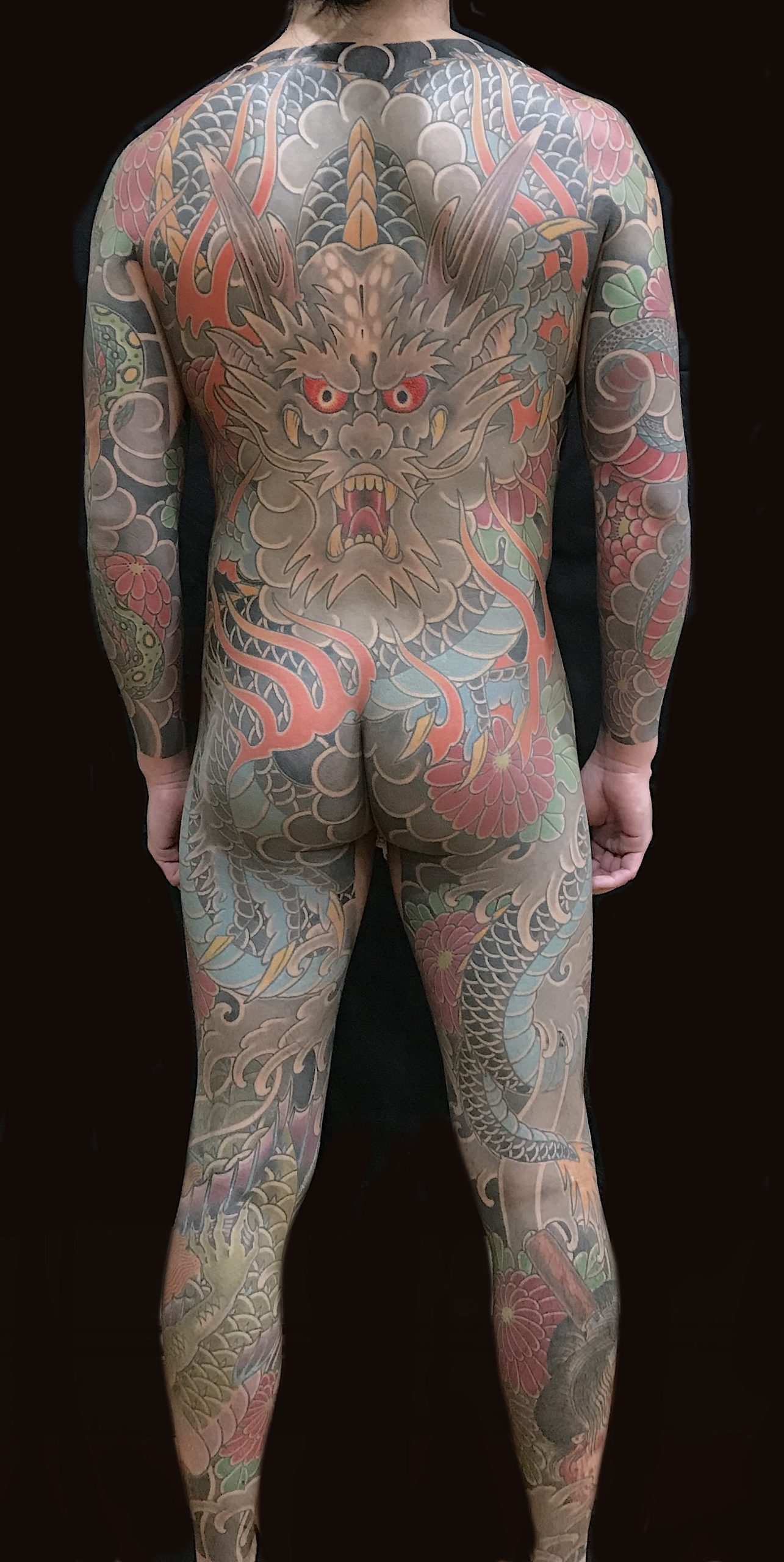
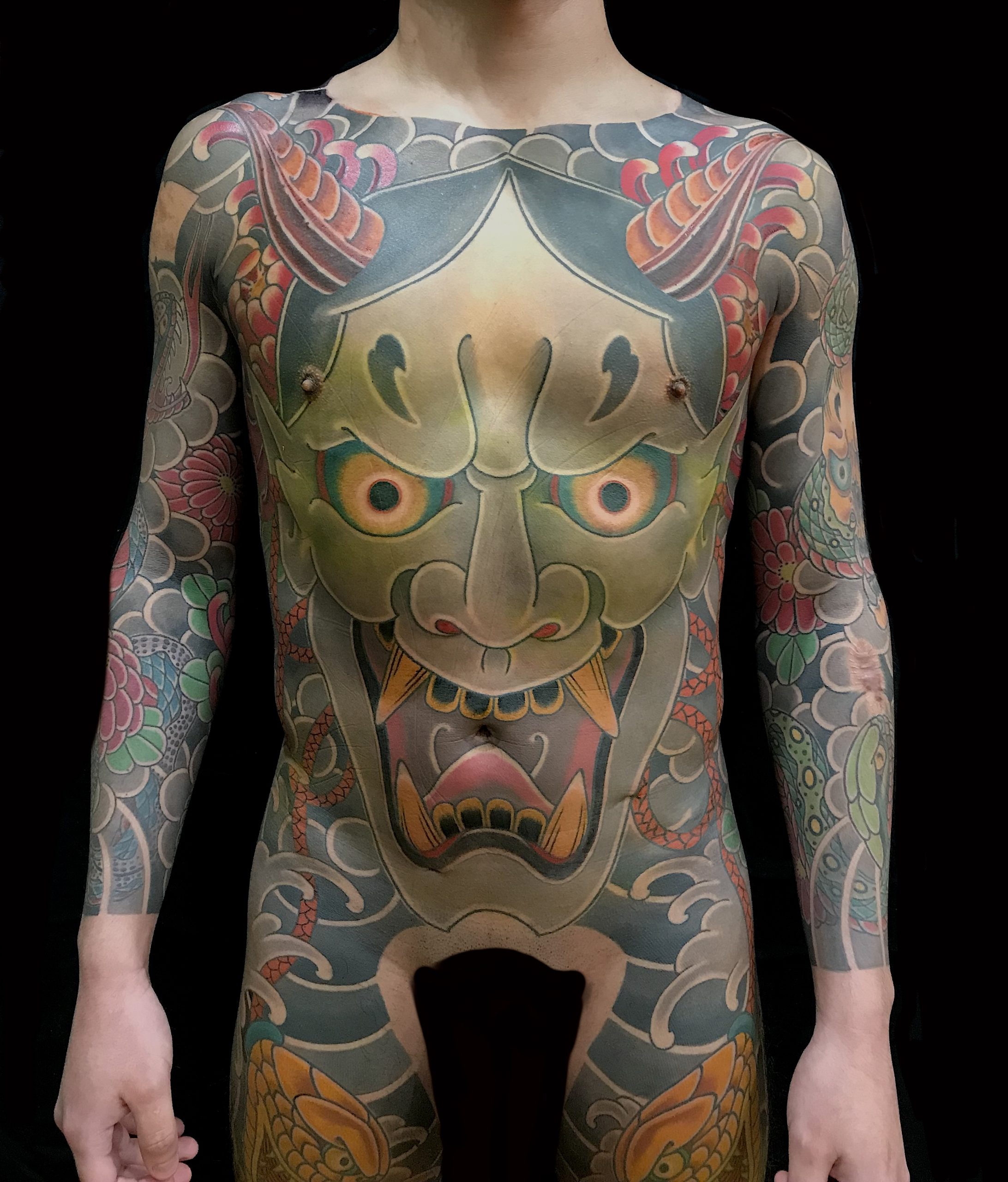
When a new client reaches out, I’m picking up on whether they’ve thought about more work, how serious they are, where they’re headed.
Most consultations happen over email now, so I can’t read body language. But the email still tells me a lot. After 30 years of doing this, I know pretty early on where a client is headed.
Most clients don’t see that far ahead. That’s fine. I plan for where they’re going, even when they don’t know yet. You know?
Reading the Room
When a new client comes in, I pick their brain. I want to know the attitude they’re going for. Aggressive or chill. Human figures or animals. Warriors or a goddess.
When someone asks for a specific character, a specific god, a specific yokai, a specific creature, it shows me they are a bit more educated in Japanese culture and the folklore. That’s when I try to pick their brain on what’s next.
When someone sends me reference images of styles I don’t do, that’s a red flag. That conversation goes a different direction.
If they’re getting a sleeve, they’ll most likely mention the other arm. Some of my California clients have been building with me for almost twenty years.
That first read sets everything in motion. And the first real decision we make together is the flower.
The Flower Rule
Here’s what I tell every client at the start. The flower you choose is going to go throughout your whole body.
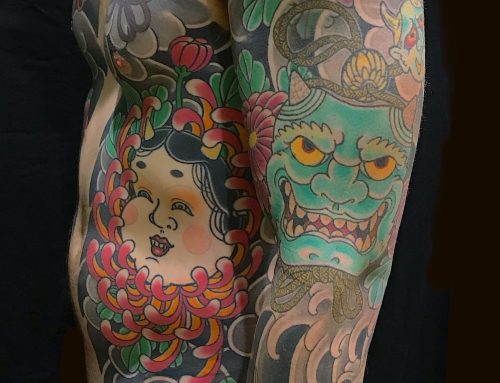
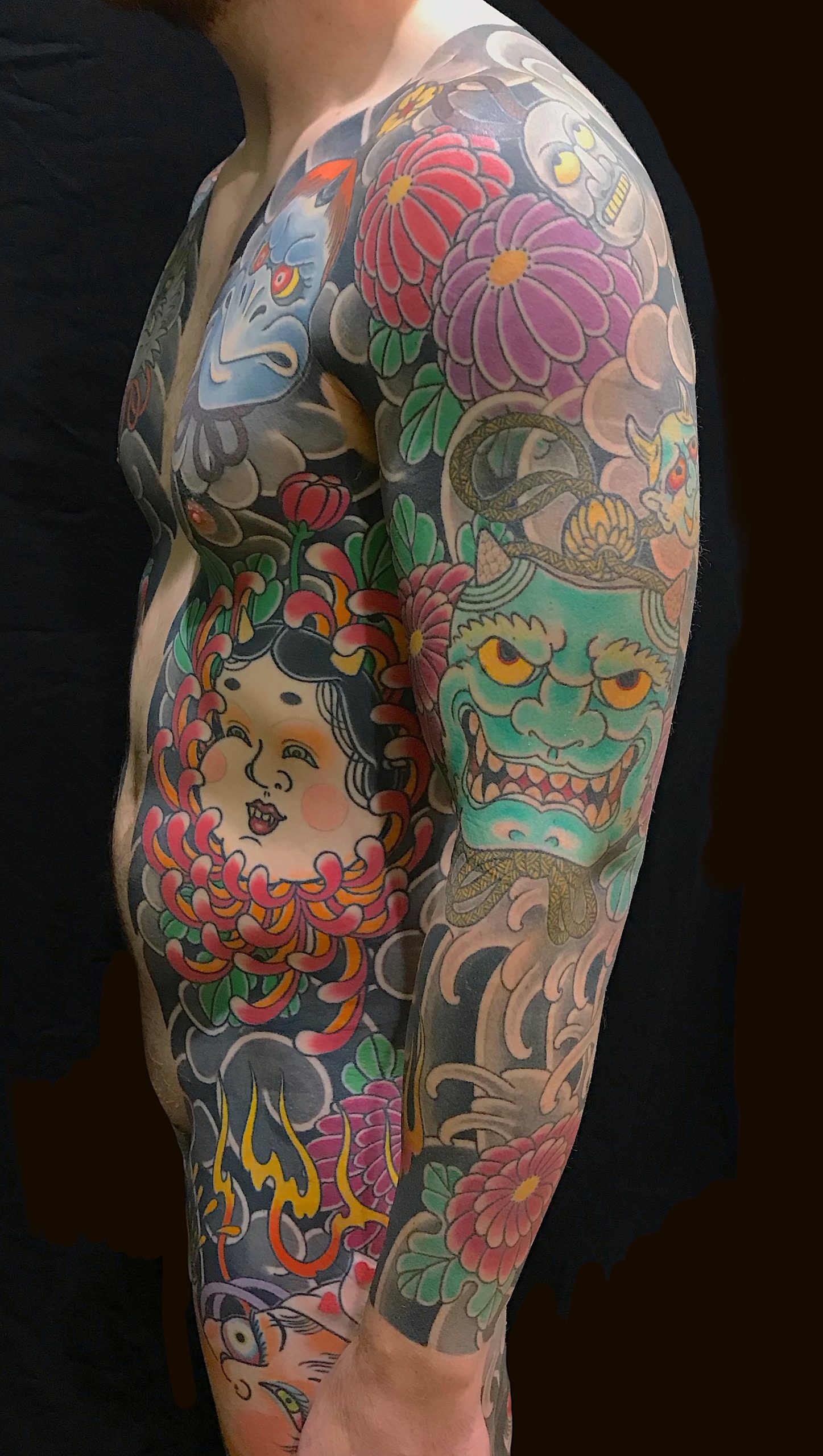
People think the flower is decoration. Filler. Something pretty between the main images. The flower is structure.
Japanese tattooing is organized by bloom. One flower, one bloom, one body. Each flower has its own individual bloom moment, celebrated separately, and there’s a practical reason behind that, way beyond symbolism.
Do peonies on one arm and cherry blossoms on the other, and the peonies are just going to eat it. They’re a heavier flower. The visual weight is completely different, and the heavier flower dominates every time you look at that person.
That’s why I call flowers firecrackers for your whole body. They’re the thing that brings everything together. Pick the right one early and every future session builds on solid ground. Pick two, and you’ve built an imbalance that throws off the eye.
💡 If you’re planning large-scale Japanese work, settle the flower before you settle anything else. Everything downstream depends on it.
The flower locks in the bloom. And once that’s locked in, meaning either works with the body or it doesn’t.
The Body Calls the Shots
If the symbolically “correct” color of a dragon fights with everything else on that person’s skin, the skin wins. I mean, you have to call the shots of what’s going to work on their body the best. And if meaning gets in the way, you have to get rid of it.
The meaning still matters to the client. I get that. Color compatibility, visual weight, directionality, how an image sits on that specific person’s structure. That’s the real work.
That’s also where I catch contradictions early. A client wants a hell scene and Kannon in there. Those are two very different spectrums. They don’t work together. So I hit them with both arguments, the visual and the meaning, and that forces a choice. Once they choose, the door opens. If they want the hell scene, there are plenty of images to build a full body suit around that. If they want the gentler route with the Kannon, there are plenty of images to back that up too.
The theme has to be something you’re willing to carry everywhere. You know?
Once the theme is clear and the client is committed to carrying it, the body itself starts telling me what goes where.
Cylinders, Flats, and Why Body Suits Fail
This is where it gets technical, and where a lot of the real work happens.
Arms and legs are cylinders. They create natural flow on their own.
The back is flat. You view it as one surface, all at once. That’s why the back piece is the traditional foundation of a Japanese body suit.
When you’ve only worked cylinders, the back is a different problem entirely. It’s a single composition that has to anchor everything around it, and building that skill takes time most people don’t put in.
Just because you can do a sleeve doesn’t mean you can build a body suit. I’m sorry to sound so egotistical, but I’ve completed them, and the difference is hundreds of hours of dedication behind the scenes that most people won’t put in.
That’s why I can’t design anything until I’ve seen the person in the room.
Drawing on the Body
I won’t pull a design off an iPad and transfer it onto someone. I take photos of the client’s physical structure before I design anything: muscle definition, folds, stretch marks, distance between joints. All of that changes when they step in the room. If they have folds, I’ll do filler there, clouds, waves, something that won’t look odd or out of proportion. Same with extra muscle. Obviously that affects every image, not just the tricky ones.
Real body topography only shows itself in person. That’s why I take photos before I design anything.
And once I know the body, every image I place has to meet one standard.
The Distance Test
Every image I do has to read from three to five feet away.
Big, bold, readable images hold in skin for decades. Fine detail and light-source gimmicks force people to get right on top of the tattoo just to see what it is, and then the work degrades anyway. Japanese work done right ages the way it was supposed to.
All of that, the theme, the flower, the anatomy, the scale, comes together or it doesn’t, based on decisions made in that first conversation.
What This Means If You’re Planning Large-Scale Work
Here’s what I’d tell you if you sat down in my chair tomorrow.
Come in with a theme you can live inside. One bloom. One flower. It’s one painting. A wildlife artist doesn’t put a tiger, a pigeon, a deer, and a whale all in one painting. A body suit is the same. You have your main images and then filler. You can’t fit every idea into one suit.
Ask your artist about the back before you start the arm. It’s worth understanding early how they think about the full picture, because those conversations shape everything that comes after.
Let the artist see your body before anyone draws anything. Your physical structure changes what works and what doesn’t.
And expect honesty. When I tell a client their idea won’t work, that’s a service. If you’re going to jump through hoops to make ideas work that shouldn’t, it’s never going to work anyway. The more you educate them, the better the outcome, every single time.
That’s just expertise. You know?
Leave A Comment